Across the Philippine archipelago, self-build housing remains a deeply rooted tradition, with countless families undertaking incremental construction projects using personal savings, remittance income, and weekend labor from relatives. This grassroots approach to homebuilding, while resourceful, often grapples with logistical hurdles inherent to small-scale concrete work. Enter the mini concrete mixer pump for sale—a compact, versatile machine increasingly finding its way into residential compounds, narrow alleyways, and hillside barangays where conventional heavy equipment simply cannot venture.
Bridging the Gap for Confined Urban and Rural Sites
Many Filipino residential lots, particularly within densely packed urban subdivisions or sloping provincial terrain, present access constraints that render full-sized concrete batching trucks impractical. Narrow gates, tight property boundaries, and steep inclines characteristic of areas like Baguio or the hillside communities surrounding Cebu create logistical puzzles that mini concrete pumps elegantly solve.
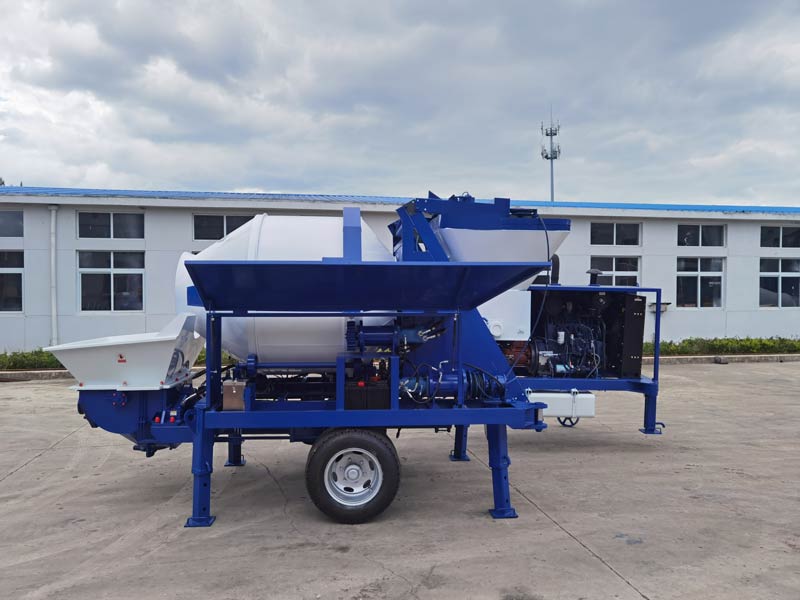
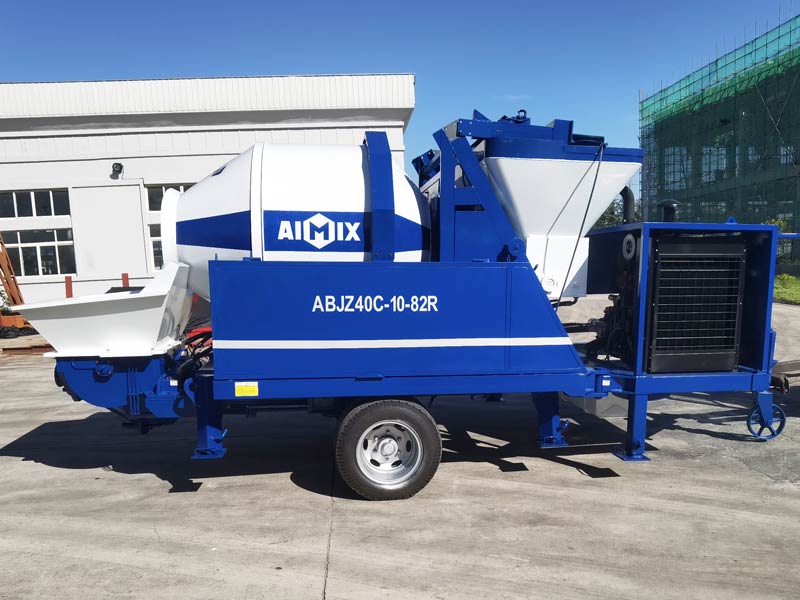
These compact units combine mixing and pumping functionality within a footprint small enough to traverse standard residential gateways, often requiring nothing more than a motorcycle-width passage for delivery. Once positioned, the machine can draw raw materials—sand, gravel, cement, water—loaded manually by available household labor, mix them to appropriate consistency, and pump the resultant concrete directly to formwork locations situated meters away or even on upper floors.
This capability proves transformative for multi-story self-build projects, a common configuration among Filipino families who construct ground floors initially, then add subsequent levels as finances permit over subsequent years. Pumping concrete to second or third-floor slabs eliminates the backbreaking bucket-relay methods historically employed, where laborers form human chains passing concrete-filled containers up makeshift scaffolding—a practice fraught with spillage, inconsistent mix quality, and genuine safety hazards.
Cost Efficiency for Incremental Construction Phases
Self-build housing in the Philippines rarely proceeds as a single continuous project. Instead, families typically complete construction in distinct phases—foundation work this year, ground floor walls next, roofing when additional funds materialize. This piecemeal approach, while financially pragmatic, creates challenges for equipment procurement, as renting full-scale concrete plants for relatively small individual pours often proves economically unjustifiable.
Mini concrete mixer pumps address this fragmentation through favorable rental economics. Equipment rental providers across the Philippines increasingly offer daily or half-day rates for these compact units, making them accessible for pour volumes as modest as a single room’s flooring slab or a short stretch of perimeter fencing footings. This scalability aligns naturally with the incremental financing patterns typical of overseas Filipino worker (OFW) families, who often remit funds in installments corresponding to specific construction milestones.
Fuel consumption represents another economic advantage. These machines typically operate on diesel engines with modest displacement, consuming considerably less fuel per operational hour compared to larger batching equipment. For budget-conscious self-builders calculating every peso against material costs, this reduced operational expenditure translates into meaningful savings, particularly across projects spanning multiple pour sessions over extended timeframes.
Labor cost reduction further enhances the value proposition. Traditional manual mixing—performed using shovels on plywood sheets or improvised mixing platforms—requires substantial physical exertion and multiple workers to achieve adequate homogeneity within reasonable timeframes. Small concrete pumps for sale consolidate this labor requirement, allowing smaller crews to achieve comparable or superior mixing consistency while simultaneously handling placement, effectively performing the work of several manual laborers through mechanized efficiency.
Quality Consistency and Reduced Material Wastage
Manual concrete mixing methods, while time-honored, frequently produce inconsistent results due to variable mixing durations, imprecise water-cement ratios estimated by eye, and incomplete blending of constituent materials. These inconsistencies can manifest as weak spots within cured concrete, premature cracking, or surface defects that compromise both structural integrity and aesthetic finish—particularly problematic for visible elements like exterior walls or driveway surfaces.
Mini concrete mixer pumps incorporate mechanized drum rotation that ensures thorough material distribution within calculated timeframes, producing batch-to-batch consistency difficult to replicate through manual methods. This uniformity proves particularly valuable for structural elements like footings and columns, where compressive strength directly correlates with long-term building safety, especially relevant given the Philippines’ susceptibility to seismic activity and typhoon-related structural stresses.
Material wastage reduction represents another significant benefit. Manual mixing often results in excess concrete preparation, as workers overestimate quantities to avoid mid-pour shortages, leading to leftover material that hardens unused. Mini concrete mixer pump in the Philippines, with their precise volumetric capabilities, allow operators to calculate and produce quantities more closely matching actual requirements, minimizing the wasteful overproduction that inflates material costs across cement, aggregate, and water consumption.
Furthermore, the pumping mechanism itself reduces spillage during placement, directing concrete precisely into formwork rather than relying on manual transport methods prone to dropping or splashing material en route. For self-builders carefully budgeting every bag of cement, this placement precision translates directly into tangible cost savings across project completion.
As Philippine self-build housing continues evolving alongside changing economic circumstances and construction financing patterns, mini concrete mixer pumps represent a practical technological bridge—offering mechanized efficiency without demanding the infrastructure, space, or capital investment associated with larger equipment, ultimately empowering families to build sturdier homes through incremental, financially manageable construction phases.