When calculating the total concrete plant price, equipment purchase is only part of the investment. Installation labor and commissioning can account for a significant share of the initial project budget, particularly when a stationary concrete batching plant requires extensive foundations, electrical connections and integrated control systems. For contractors planning a new concrete production facility, understanding these expenses before purchasing equipment helps prevent budget overruns and unexpected delays. It also provides a more accurate basis for comparing stationary plants with a mobile concrete plant.
What Installation and Commissioning Costs Include
Installation and commissioning are two related but different stages. Installation covers the physical construction and connection of equipment, while commissioning verifies that the entire production system operates safely and meets its technical requirements.
| Cost Category | Main Activities | Cost Influencing Factors |
|---|---|---|
| Site preparation | Ground leveling and access preparation | Terrain and site conditions |
| Foundation construction | Concrete foundations and anchor bolts | Plant layout and soil conditions |
| Mechanical installation | Equipment assembly and alignment | Plant capacity and configuration |
| Electrical installation | Cable connections and control wiring | Automation level and power supply |
| Commissioning | Testing, calibration and trial production | System complexity and testing requirements |
These expenses should be identified separately in the initial quotation. Otherwise, a seemingly competitive concrete plant price(planta de hormigón precio) may exclude important services that buyers must arrange independently.
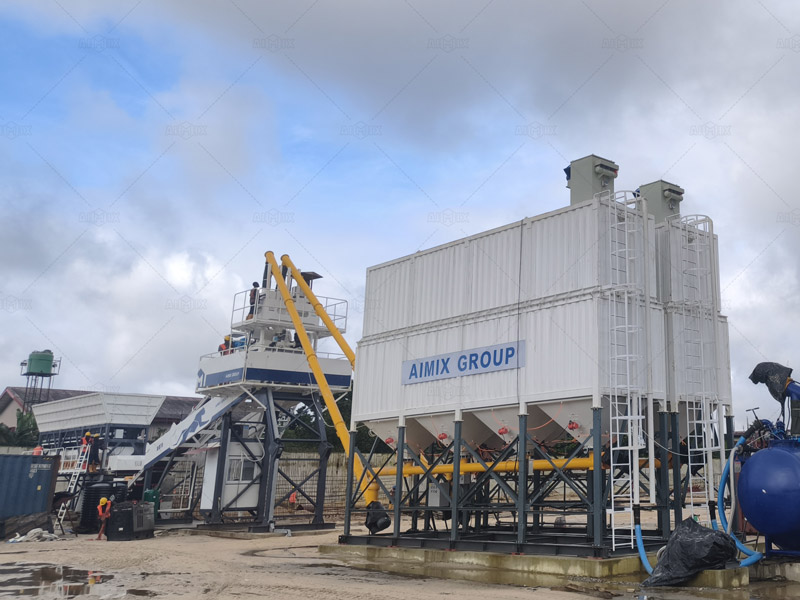
Key Factors Affecting Installation Labor Costs
Plant Capacity and Equipment Configuration
Production capacity directly influences installation workload. A small stationary batching plant generally has fewer aggregate storage bins, shorter conveyor systems and simpler supporting structures than a high-capacity commercial installation.
Larger plants require more technicians, lifting equipment and assembly time. Additional cement silos, aggregate batching systems, conveyors and environmental protection equipment also increase the number of installation procedures.
For example, installing a 50 m³/h plant may involve a relatively straightforward assembly process, while a 120–240 m³/h facility requires more extensive mechanical and electrical coordination. Therefore, buyers should evaluate installation requirements alongside the equipment’s rated capacity when comparing the concrete plant price.
Foundation and Civil Engineering Requirements
Stationary concrete batching plants require stable foundations to support the weight and dynamic loads of mixers, aggregate bins, cement silos and other equipment. Foundation construction is often one of the most variable installation expenses.
Several site conditions influence the budget:
- Soil bearing capacity: Weak or unstable soil may require reinforcement or deeper foundations.
- Ground elevation: Uneven terrain increases excavation, leveling and earthwork requirements.
- Plant layout: Different equipment arrangements require different foundation dimensions and anchor positions.
- Drainage: Rainwater management and wastewater collection may require additional civil engineering work.
In Peru, projects located in mountainous regions or remote mining areas may face additional challenges related to terrain, transportation and construction access. These conditions can increase labor hours and extend the preparation schedule for a concrete plant Peru(planta de concreto Perú) project.
Local Labor and Installation Team Availability
Installation labor costs depend on the availability and experience of local construction workers, electricians, welders and mechanical technicians. Projects in major industrial centers may have easier access to qualified personnel, whereas remote construction sites can involve additional accommodation, transportation and travel expenses.
International equipment suppliers may provide installation guidance or dispatch technical personnel, but the scope of these services varies. Buyers should confirm whether the quotation includes on-site supervision, mechanical assembly, electrical assistance, accommodation and travel expenses.
What Determines Concrete Plant Commissioning Costs?
Electrical and Control System Testing
Before production begins, technicians need to inspect electrical connections, motor rotation, safety devices and control cabinet functions. Automated batching systems also require communication checks between weighing sensors, aggregate feeders, cement delivery equipment and the central control system.
More sophisticated automation configurations may require additional calibration and troubleshooting. Accurate weighing is particularly important because material proportioning directly affects concrete quality, consistency and production costs.
Weighing System Calibration
Calibration verifies that the weighing systems measure cement, water, aggregates and additives within their specified tolerances. Incorrect readings can cause material waste, inconsistent concrete strength and unnecessary operating expenses.
Commissioning should include:
- Checking load cells and weighing indicators.
- Verifying zero-point accuracy and weighing responses.
- Testing water and additive measurement systems.
- Confirming batching sequences and control software settings.
Depending on local requirements, additional inspection or certification by qualified third-party specialists may also be necessary.
Trial Production and Performance Verification
After mechanical and electrical checks, the plant undergoes trial operation. Technicians test the complete production process, from aggregate feeding and material weighing to mixing and concrete discharge.
Trial production helps identify problems such as material blockages, abnormal vibration, weighing deviations and unstable motor operation. It also allows operators to become familiar with the control system before commercial production begins.
For a stationary plant, commissioning should verify not only individual machine functions but also the coordination of the entire production line. This reduces the risk of equipment downtime immediately after startup.
How Does Installation Compare with a Mobile Concrete Plant?
A mobile concrete plant(planta de hormigón móvil) generally requires less permanent civil engineering work because its modular structure is designed for transportation and relocation. Some configurations can be installed with limited foundation preparation, reducing construction labor and startup time.
However, mobile equipment still requires site leveling, electrical connections, equipment assembly and operational testing. Its transportation and relocation expenses should also be considered when calculating the total concrete plant price.
Stationary plants are generally more suitable for long-term production at a fixed location, while mobile configurations offer greater flexibility for temporary projects. The right choice depends on project duration, production demand and site conditions rather than installation expenses alone.
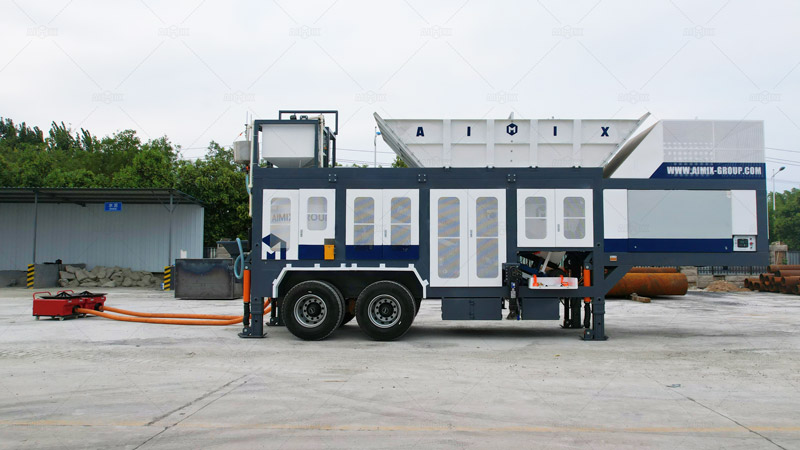
AJQ70 Compact Concrete Plant: Installation Efficiency
The AJQ70 compact concrete plant(AJQ70 planta compacta de concreto) is designed for projects that require relatively high production capacity without the extensive installation process associated with conventional large stationary plants. It has a theoretical capacity of 70 m³/h, while actual output is approximately 55–65 m³/h under suitable operating conditions.
Its compact configuration supports faster equipment installation, with an installation period of less than 72 hours under prepared site conditions. Transportation typically requires two 40HQ containers, with an additional open-top container if a cement silo is included.
For contractors comparing a stationary concrete plant with a mobile concrete plant, the AJQ70 provides another option between conventional stationary installations and fully mobile solutions. Its reduced installation time can help shorten the period between equipment delivery and initial production, although foundations, utilities and site preparation must still be arranged in advance.
How to Control Installation and Commissioning Expenses
Effective cost control starts before equipment delivery. Buyers should request detailed foundation drawings, electrical requirements, equipment layouts and installation instructions from the supplier. Preparing these items in advance reduces waiting time and prevents unnecessary modifications during assembly.
It is also important to clarify the division of responsibilities between the equipment manufacturer and local contractors. A written installation agreement should specify labor arrangements, technical supervision, commissioning procedures, spare parts and acceptance criteria.
Before finalizing a concrete plant price, request a breakdown covering equipment, transportation, civil works, mechanical and electrical installation, commissioning and operator training. For a concrete plant Peru project or another international installation, this detailed assessment provides a more realistic investment budget and helps avoid unexpected expenses after delivery.