Concrete production costs depend on more than the price of raw materials. Transportation, labor, energy consumption, equipment installation, and material handling can all affect the final cost per cubic meter. For contractors working on infrastructure and construction projects, an efficient mobile concrete plant can help control these expenses while maintaining stable concrete quality and production efficiency.
Unlike a conventional stationary facility, a mobile concrete plant(planta de concreto móvil) can be transported and installed closer to the construction site. This reduces the distance between production and placement, which can lower concrete transportation costs and improve project scheduling. For contractors handling road, bridge, housing, and commercial projects, choosing the right configuration is therefore an important part of cost management.
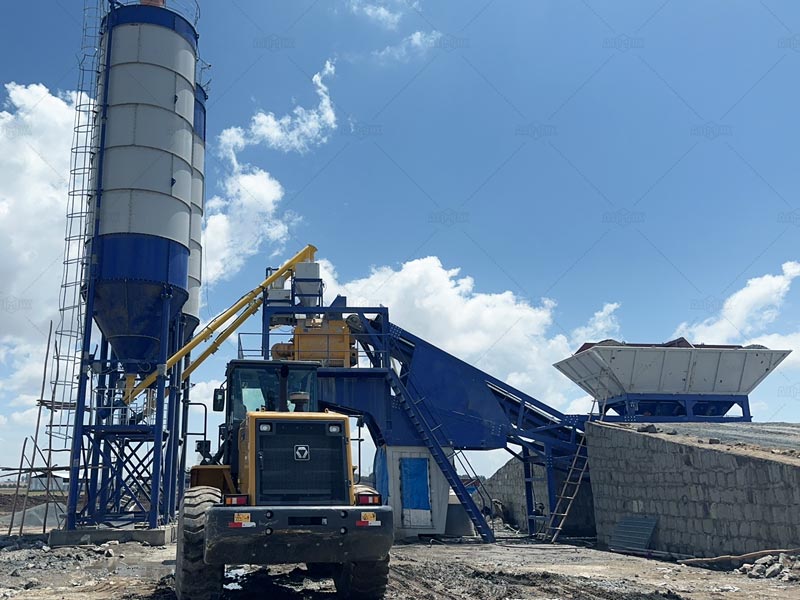
Reduce Concrete Transportation Costs
Transportation is one of the most significant indirect costs in concrete production. When concrete is produced far from the construction site, ready-mix trucks must travel longer distances, increasing fuel consumption, vehicle depreciation, and delivery time.
Produce Concrete Closer to the Project
A mobile concrete plant can be relocated according to project requirements. By establishing the plant near the construction area, contractors can shorten delivery distances and reduce the number of trucks required for the same production volume.
This advantage is particularly valuable for projects with large concrete demand, such as highways, bridges, dams, industrial facilities, and remote construction sites. Shorter transportation distances also reduce the risk of delays caused by traffic or poor road conditions.
Lower Installation and Relocation Expenses
Traditional concrete plants generally require foundations, extensive site preparation, and more complicated installation procedures. These requirements can increase initial construction costs and extend the time before production begins.
Choose a Configuration Suitable for Temporary Projects
For projects with limited construction periods, a small concrete plant(planta de concreto pequeña) or mobile configuration can provide a more economical solution. Mobile equipment is designed for easier transportation and installation, allowing contractors to move production capacity when one project is completed.
Instead of investing heavily in permanent infrastructure, contractors can use the same equipment across multiple projects. This can improve equipment utilization and distribute the initial investment over a longer operating period.
Optimize Production Capacity and Equipment Configuration
Oversized equipment does not necessarily mean lower production costs. If actual concrete demand is significantly lower than plant capacity, unnecessary investment in equipment, electricity, maintenance, and spare parts can increase the cost per cubic meter.
Match Capacity with Actual Demand
Before selecting a concrete plant, contractors should estimate peak hourly demand, total project volume, working hours, project duration, and future construction requirements. A properly sized plant can avoid both production bottlenecks and excessive idle capacity.
| Project Requirement | Potentially Suitable Configuration | Main Cost Advantage |
|---|---|---|
| Small construction projects | Small concrete plant | Lower initial investment |
| Multiple short-term projects | Mobile concrete plant | Lower relocation costs |
| Large infrastructure projects | Higher-capacity mobile plant | Higher production efficiency |
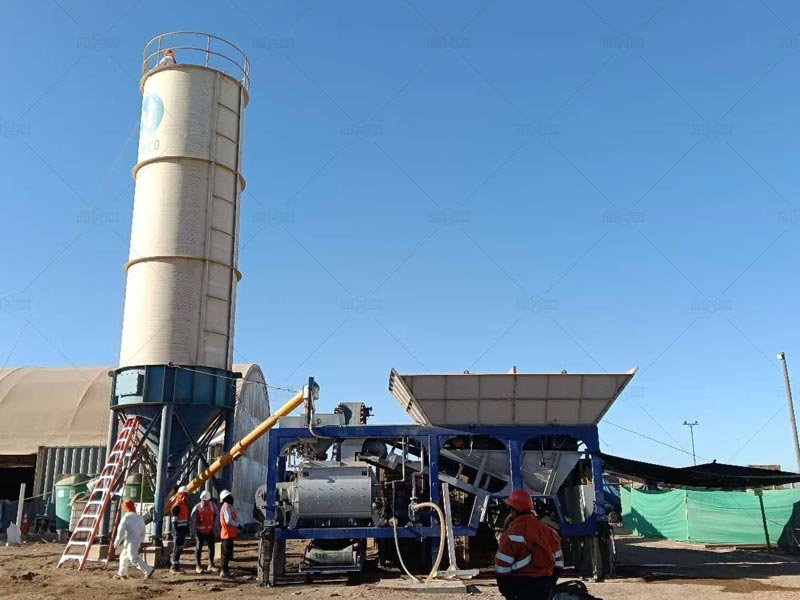
Improve Labor and Operating Efficiency
Labor costs can become substantial when a concrete production system requires many operators and manual processes. Modern batching plants can integrate automated weighing, feeding, mixing, and control systems to reduce unnecessary manual intervention.
Use Automated Batching and Control
Accurate material weighing helps maintain consistent mix proportions and reduces material waste. Automated controls can also simplify operation, allowing fewer workers to manage routine production tasks.
For contractors considering a concrete batching plant Peru(planta dosificadora de concreto Perú) project, automation can be especially useful when skilled operators are difficult to recruit or when projects are located far from major cities. A simpler operating process can help reduce labor pressure while maintaining consistent concrete quality.
Reduce Material Waste and Energy Consumption
Efficient production is not simply about producing more concrete per hour. It also means using cement, aggregates, water, and admixtures accurately. Excessive material consumption can directly increase the cost of every cubic meter produced.
Focus on Accurate Weighing and Efficient Mixing
A well-configured mobile concrete plant should provide reliable weighing systems and efficient mixing performance. Accurate batching reduces overuse of raw materials, while effective mixing helps produce uniform concrete within the required cycle time.
Energy efficiency should also be considered when comparing equipment. Motors, conveyors, mixers, and control systems should be appropriately matched to the required production capacity. Avoiding oversized components can reduce unnecessary electricity consumption during daily operation.
Consider the Total Cost of Ownership
Purchase price is only one part of the overall economics of a concrete plant(economía general de una planta de hormigón). Contractors should also evaluate transportation, installation, maintenance, spare parts, electricity, labor, and potential relocation costs.
For example, a lower-priced plant may become more expensive over several years if it requires frequent maintenance or consumes excessive energy. Conversely, a properly configured small concrete plant may offer better economic performance when production demand is moderate.
Evaluate Costs Over the Entire Project
When comparing equipment options, calculate the expected cost per cubic meter rather than focusing only on the initial purchase price. This approach provides a clearer picture of actual profitability and helps contractors select equipment based on operational efficiency.
Why Mobile Batching Can Be a Cost-Effective Choice
An efficient mobile concrete plant can reduce several major expenses simultaneously: concrete transportation, site preparation, installation, labor, material waste, and equipment relocation. Its flexibility is particularly valuable for contractors working on multiple projects or projects where concrete must be produced close to the point of use.
For the Peruvian construction market, a concrete batching plant Peru solution should be selected according to local project conditions, production requirements, transportation access, and expected operating period. Whether the project requires a compact small concrete plant or a higher-capacity mobile system, the most economical choice is the configuration that balances production capacity, mobility, operating efficiency, and long-term maintenance costs.