As manufacturing moves rapidly toward digitalization and automation, the concept of the smart factory has become a defining vision for Industry 4.0. Smart factories integrate cyber-physical systems, real-time data exchange, automation, and advanced analytics to create highly efficient, flexible, and responsive production environments. Within this ecosystem, workshop gantry cranes play a crucial role in handling heavy materials, components, and assemblies across production stages.
Traditionally, workshop gantry cranes have been designed as standalone lifting equipment focused primarily on load capacity, structural strength, and basic safety functions. However, in smart factories, cranes are no longer isolated machines. Instead, they are evolving into intelligent material handling nodes that interact seamlessly with production systems, warehouse management platforms, and digital control architectures. This article explores how workshop gantry cranes are integrated into smart factories, the technologies that enable this integration, and the operational benefits it delivers.
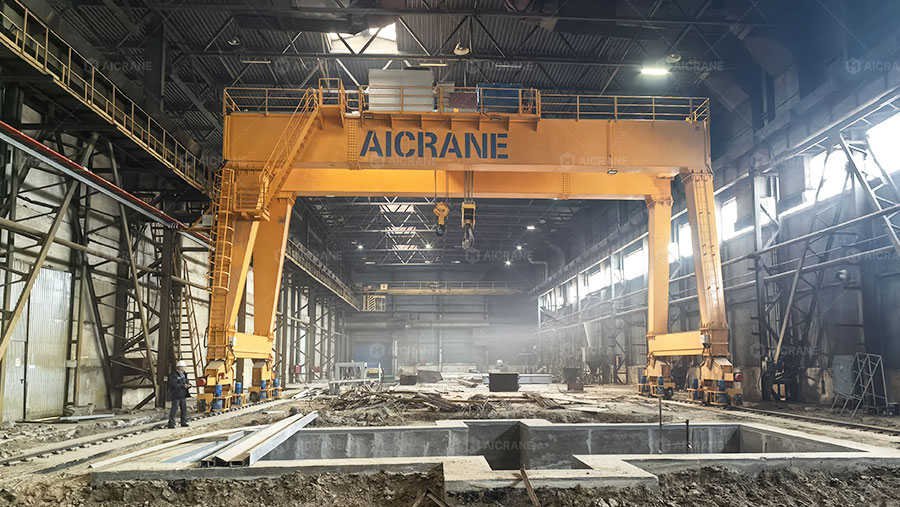
The Role of Workshop Gantry Cranes in Smart Manufacturing
Workshop gantry cranes are widely used in steel structure fabrication, precast concrete production, heavy machinery assembly, and equipment maintenance workshops. Their ability to cover large work areas, lift heavy loads, and operate flexibly makes them indispensable in industrial workshops.
In a smart factory context, gantry cranes are expected to do more than lift and transport materials. They must support just-in-time production, synchronize with automated processes, and provide real-time operational data. Integration with smart factory systems transforms gantry cranes into active participants in the manufacturing workflow, rather than passive handling tools.
Core Technologies Enabling Smart Factory Integration
IoT and Sensor-Based Monitoring
The integration of workshop gantry cranes with smart factories begins with the deployment of IoT sensors across key crane components. Load sensors monitor lifting forces and ensure precise weight measurement, while position sensors track hoist height, trolley travel, and crane movement. Condition monitoring sensors measure motor temperature, vibration levels, and gearbox performance.
These sensors continuously collect data that reflects both indoor gantry crane performance and operating conditions. The data is transmitted to factory-level monitoring platforms, enabling real-time visibility into crane operations and health status.
Intelligent Control Systems and PLC Integration
Modern workshop gantry cranes are equipped with advanced PLC-based control systems that support digital communication protocols. These controllers enable cranes to exchange data with Manufacturing Execution Systems (MES), Warehouse Management Systems (WMS), and Enterprise Resource Planning (ERP) platforms.
Through PLC integration, crane movements can be synchronized with production schedules. For example, a gantry crane can automatically deliver raw materials to a workstation when a production order is released or transport finished components to designated storage or assembly areas.
Seamless Connectivity with Smart Factory Platforms
Integration with Manufacturing Execution Systems (MES)
MES platforms coordinate production activities on the factory floor, tracking work orders, machine status, and material flow. When workshop gantry cranes are integrated with MES, lifting and transport operations become part of the digital production plan.
The crane receives task instructions directly from the MES, such as moving specific components at predefined times. In return, the crane provides feedback on task completion, cycle time, and any operational deviations. This closed-loop communication improves scheduling accuracy and reduces bottlenecks.
Coordination with Warehouse and Logistics Systems
In smart factories, material handling extends beyond production lines to include automated warehouses and logistics systems. Workshop gantry cranes can interface with WMS platforms to support intelligent storage and retrieval operations.
By sharing location data and load information, large gantry cranes help ensure that materials are delivered to the right place at the right time. This integration reduces manual handling, minimizes inventory errors, and supports lean manufacturing principles.
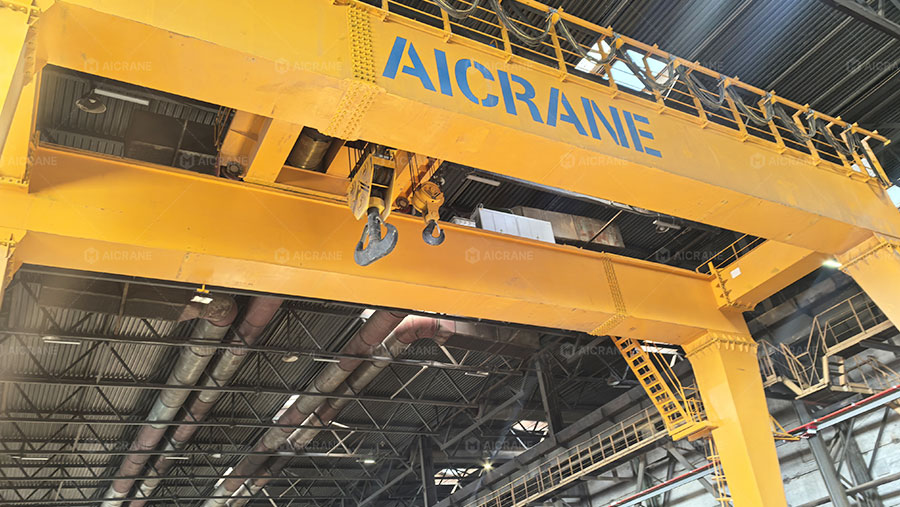
Automation Levels in Smart Workshop Gantry Cranes
Semi-Automated Operation
In many smart factories, workshop gantry cranes operate in semi-automated modes. Operators remain responsible for supervision, but routine movements are automated. Functions such as anti-sway control, position memory, and predefined travel paths reduce operator workload and improve consistency.
Semi-automation provides a practical transition toward smart manufacturing without requiring full system redesign or extensive workforce retraining.
Fully Automated Gantry Crane Systems
In highly advanced smart factories, workshop gantry cranes can operate in fully automated modes. Crane tasks are generated by production systems and executed without human intervention. Advanced sensors, safety scanners, and vision systems ensure safe operation even in complex environments.
Fully automated gantry cranes are particularly valuable in repetitive production processes, hazardous environments, or facilities operating around the clock.
Data Analytics and Predictive Maintenance
One of the most significant benefits of integrating workshop gantry cranes with smart factories is the ability to apply data analytics to crane operation and maintenance.
Operational data, such as lifting cycles, travel distances, and load distribution, is analyzed to identify inefficiencies and optimize workflows. Maintenance data, including vibration patterns and temperature trends, supports predictive maintenance strategies.
Instead of relying on fixed maintenance schedules, smart factories use real-time crane condition data to plan maintenance activities precisely when needed. This approach reduces downtime, extends component life, and lowers overall maintenance costs.
Enhancing Safety and Compliance in Smart Factories
Safety is a fundamental requirement in smart manufacturing environments. Integrated gantry crane systems significantly enhance safety through intelligent monitoring and automated safeguards.
Load monitoring systems prevent overload conditions and ensure compliance with design limits. Anti-collision and zone protection technologies prevent crane movements into restricted or occupied areas. Safety interlocks ensure that crane operations are coordinated with other machines and human activities.
In addition, all safety-related events are recorded digitally, providing valuable data for safety audits, training, and continuous improvement initiatives.
Supporting Flexible and Reconfigurable Production
Smart factories are designed for flexibility, enabling rapid adaptation to changing product designs and production volumes. Integrated workshop gantry cranes support this flexibility by allowing reconfigurable material handling workflows.
Through software-based control and digital mapping, crane routes, lifting points, and task priorities can be adjusted without mechanical modifications. This capability is especially valuable in project-based manufacturing environments, such as heavy equipment assembly or steel structure fabrication, where layouts frequently change.
Digital Twin Technology and Simulation
Integration with smart factories also enables the use of digital twin technology for workshop gantry cranes. A digital twin is a virtual model that mirrors the physical crane in real time, using data from IoT sensors and control systems.
Digital twins allow engineers to simulate crane operations, evaluate layout changes, and test automation strategies before implementation. This reduces risk, shortens commissioning time, and supports continuous optimization throughout the crane’s lifecycle.
Challenges and Best Practices for Integration
While the benefits of integrating workshop gantry cranes with smart factories are substantial, successful implementation requires careful planning. Key challenges include system compatibility, cybersecurity, and data management.
Crane control systems must support standardized communication protocols to ensure interoperability with factory platforms. Robust cybersecurity measures are essential to protect connected systems from unauthorized access. Equally important is training operators and maintenance personnel to work effectively with digital tools and data-driven workflows.
Adopting a phased integration approach, starting with monitoring and semi-automation, often delivers the best results.
Future Trends in Smart Factory Gantry Crane Integration
Looking ahead, the integration of workshop gantry cranes with smart factories will continue to deepen. Artificial intelligence will enable adaptive crane behavior, while advanced vision systems will support more autonomous operation. The adoption of 5G networks will enhance connectivity and real-time responsiveness.
Ultimately, workshop gantry cranes will evolve into self-optimizing material handling systems that dynamically adjust to production demands and operating conditions.
Conclusion
The integration of workshop gantry cranes with smart factories represents a critical step in the evolution of industrial material handling. By connecting gantry cranes to digital production systems, manufacturers gain unprecedented visibility, efficiency, safety, and flexibility.
As smart factories become the standard for modern manufacturing, workshop gantry cranes must also evolve. Intelligent, connected, and automated gantry crane systems are no longer optional enhancements but essential components of competitive, future-ready manufacturing operations.