Across Latin America, government investment in roads, bridges, public housing, and municipal infrastructure continues to expand. However, many small and medium contractors still struggle to participate in these projects because they lack large-scale production resources. Traditionally, government tenders have favored companies that already operate large production facilities such as a stationary concrte batching plant or a large ready mix concrete plant. As a result, smaller contractors often find themselves limited to subcontracting roles.
In recent years, the emergence of the mobile concrete plant(planta hormigonera movil) has begun to change this dynamic. Compact, transportable, and relatively affordable, mobile mixing systems allow contractors to produce concrete directly at project sites without investing in large permanent facilities. This technological shift is helping smaller construction companies compete more effectively for public contracts across the region.
For contractors exploring opportunities in markets such as concrete plants in Chile or other Latin American countries, understanding how mobile concrete technology can support government project participation is becoming increasingly important. The following sections explain how mobile plants help small contractors overcome traditional barriers and enter the public infrastructure market.
The Traditional Barriers for Small Contractors in Government Projects
High Investment Requirements for Concrete Production
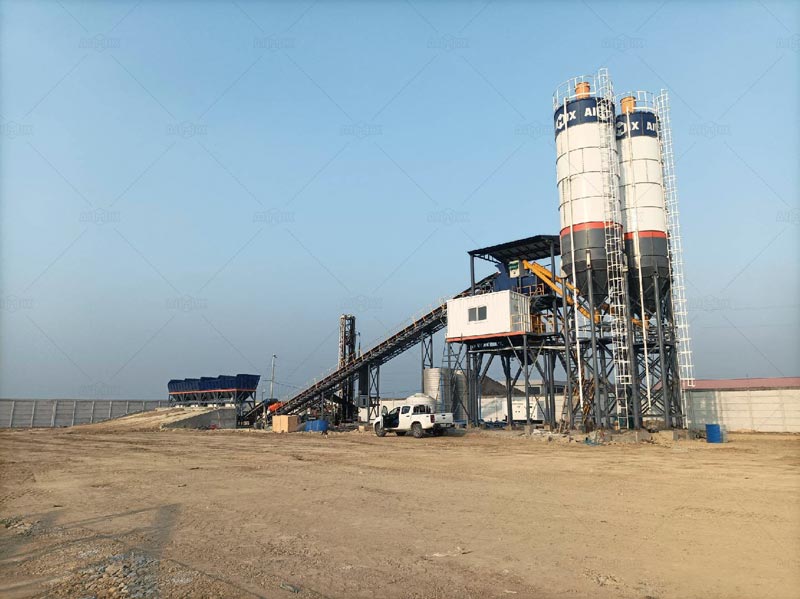
One of the biggest barriers for smaller contractors has always been the capital investment required to operate a full-scale concrte batching plant(planta dosificadora de concreto). Stationary facilities often require:
- Permanent land acquisition or long-term leasing
- Extensive civil foundation construction
- Large aggregate storage infrastructure
- Fixed utility connections and environmental permits
For large multinational contractors, these requirements are manageable. For smaller local companies, however, the financial risk is often too high—especially when the duration of government projects may only last a few months or a few years.
Dependence on External Ready-Mix Suppliers
Many contractors rely on an external ready mix concrete plant to supply materials for construction. While this arrangement may work for urban projects, it creates several challenges in government infrastructure work:
- Transportation delays from distant mixing plants
- Limited supply during peak construction seasons
- Higher material costs due to third-party margins
- Quality fluctuations caused by long transport times
These issues are especially significant for remote projects such as rural road construction, mountain infrastructure, or mining-related public works.
Why Mobile Concrete Plants Are Changing the Game
Lower Entry Costs
A mobile concrete plant significantly reduces the upfront investment required to begin concrete production. Because these systems are designed with modular structures and integrated components, contractors can deploy them quickly without large-scale civil engineering work.
The reduced setup cost allows smaller construction firms to participate in projects that previously required partnerships with large suppliers.
Flexible Deployment Across Multiple Projects
Unlike a fixed concrte batching plant, mobile systems can be relocated from one project to another. This mobility offers several strategic advantages:
- Concrete production can be placed directly at job sites
- Equipment utilization remains high across different contracts
- Contractors can follow regional infrastructure programs
- Temporary projects become economically viable
For companies working on government infrastructure programs across multiple municipalities, this flexibility can significantly improve profitability.
Faster Project Mobilization
Government projects often operate under strict timelines. The ability to install a mobile concrete plant within days rather than months allows contractors to mobilize faster than competitors relying on external supply chains.
This speed is particularly valuable in emergency reconstruction projects, road maintenance programs, and municipal public works contracts.
Practical Pathways for Entering Government Contracts
Participating in Small Infrastructure Tenders
Many Latin American governments divide infrastructure development into smaller tenders designed specifically for local contractors. With a mobile production system, contractors can bid for projects such as:
- Rural road paving
- Small bridge construction
- Urban drainage infrastructure
- Municipal housing projects
- Public school and hospital construction
By demonstrating on-site concrete production capability, contractors strengthen their technical proposal and increase their chances of winning bids.
Supporting Regional Infrastructure Programs
Countries across Latin America have launched decentralized infrastructure programs that focus on improving regional connectivity. In markets such as concrete plants in Chile(plantas de hormigón en Chile), contractors often work in geographically dispersed regions where transporting concrete from a central ready mix concrete plant becomes inefficient.
Deploying a mobile concrete plant close to construction sites helps contractors meet both logistical and quality requirements set by government engineering specifications.
Partnering with Local Material Suppliers
Small contractors can further reduce costs by sourcing aggregates locally while operating their own concrte batching plant. This approach provides several advantages:
- Lower aggregate transportation costs
- Improved supply stability
- Stronger relationships with regional suppliers
- Greater control over material quality
Combining local materials with mobile mixing equipment creates a highly competitive project delivery model.
Case Example: Infrastructure Development in Chile
The Chilean construction market provides a strong example of how mobility is transforming concrete production. Many infrastructure projects in mountainous or remote regions require contractors to operate far from urban industrial centers.
Traditionally, contractors depended on large ready mix concrete plant(fabrica de concreto premezclado) networks located near major cities. However, transporting concrete over long distances through mountainous terrain often resulted in delays and quality issues.
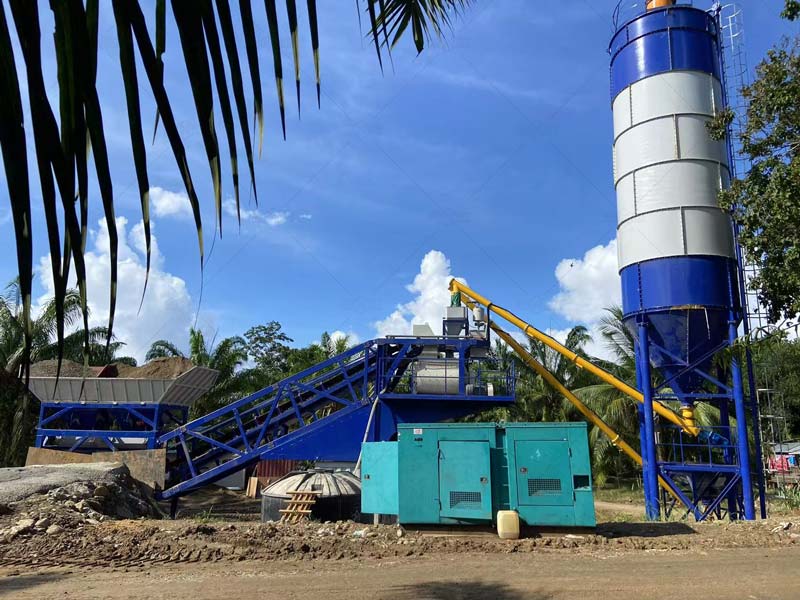
Today, mobile production solutions are increasingly used for projects involving concrete plants in Chile. Contractors deploy compact mobile concrete plant units near project sites, enabling consistent production regardless of location.
This model has proven especially effective in projects such as:
- Mountain highway upgrades
- Mining infrastructure access roads
- Rural bridge construction
- Regional public housing developments
For smaller contractors, this operational approach provides a realistic pathway to compete for infrastructure work that was previously dominated by larger companies.
Operational Tips for Small Contractors
Choose the Right Plant Capacity
Not every government project requires large production volumes. Many contractors benefit from selecting a compact mobile concrete plant designed for medium output rather than investing in oversized equipment.
This strategy helps maintain lower operational costs while still meeting project requirements.
Focus on Quality Compliance
Government infrastructure projects typically follow strict engineering standards. When operating a concrte batching plant, contractors must ensure:
- Accurate aggregate weighing systems
- Reliable cement dosing equipment
- Consistent mixing performance
- Proper quality control documentation
Demonstrating quality assurance capabilities is often as important as pricing during tender evaluations.
Invest in Skilled Operators
Even the most advanced ready mix concrete plant or mobile system requires trained personnel. Contractors should ensure that plant operators understand batching procedures, equipment maintenance, and material calibration.
Professional operation helps maintain production efficiency while reducing equipment downtime.
The Growing Role of Mobile Concrete Production in Latin America
Infrastructure development across Latin America is expected to remain strong over the coming decade. Governments continue to invest in transportation networks, urban development, and public services to support economic growth.
Within this evolving landscape, the mobile concrete plant is becoming an increasingly valuable tool for smaller contractors seeking to expand their capabilities. By reducing investment barriers, improving project mobility, and enabling on-site production, these systems allow contractors to compete more effectively for public works projects.
As more companies adopt flexible production solutions alongside traditional facilities such as a ready mix concrete plant or stationary concrte batching plant, the construction industry in Latin America is gradually becoming more accessible to smaller and regional contractors.
For businesses aiming to grow within government infrastructure markets, mobile concrete technology is not simply a piece of equipment—it is a strategic pathway toward greater competitiveness and long-term development.