A six-month construction project may seem short, but concrete demand can be intense during key stages. Foundations, columns, slabs, roads, drainage structures, and other concrete works may need large volumes within a limited period. At the same time, contractors in Indonesia often face long transport distances, traffic, island logistics, and changing site conditions.
Because of this, concrete supply becomes more than an equipment question. It becomes a project scheduling and cost question. Should you keep buying ready-mix concrete? Or should you produce concrete at the project site? And if you build your own production system, can a fast installation plant generate enough concrete before the project ends?
For many six-month projects, a fast installation solution can make sense. However, the decision should come from concrete volume, peak demand, site conditions, installation time, and future equipment use. The project duration alone cannot provide the answer.
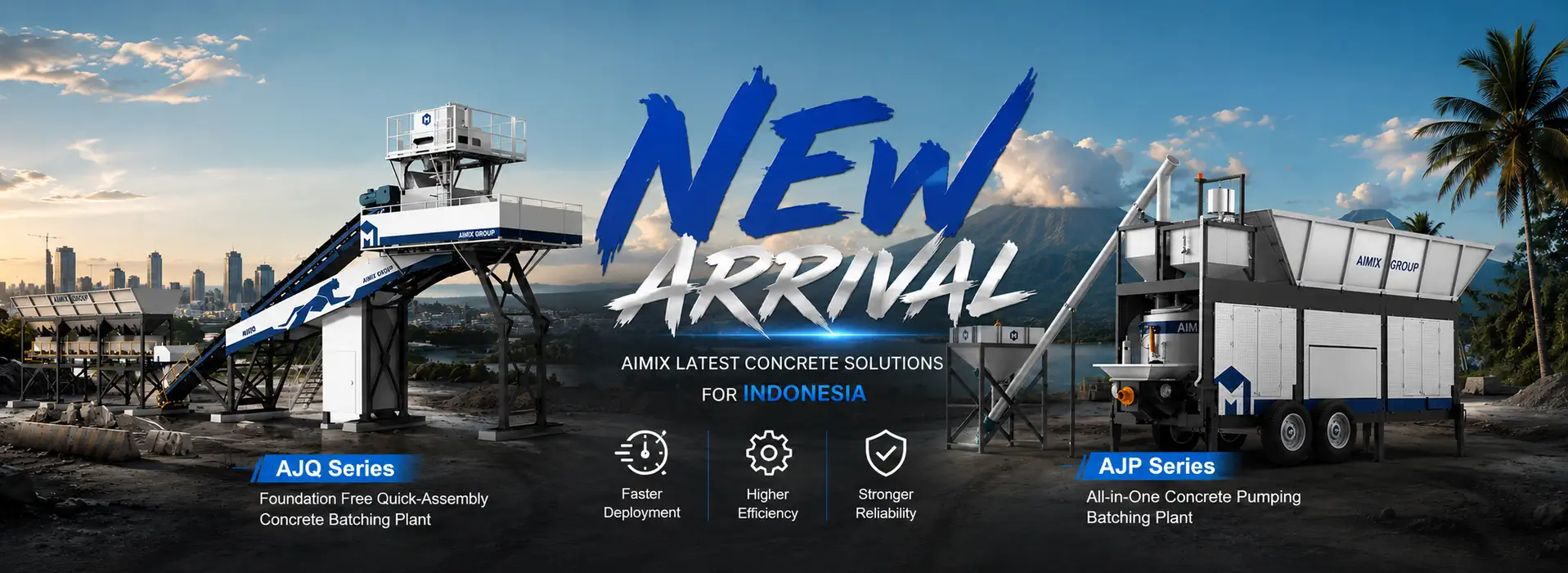
Why Does a Six-Month Project Need a Different Concrete Supply Strategy?
A short project has one obvious limitation: time. Every week spent preparing the concrete production system reduces the time available for actual construction.
For this reason, contractors should consider not only the production capacity of a concrete mixture plant, but also how quickly it can become operational and how well it fits the construction schedule.
For example, assume a project requires 18,000 m³ of concrete during six months. The average requirement is around 3,000 m³ per month. However, concrete consumption will not remain constant. One month may focus on foundations, while another may involve major structural pours.
Therefore, average demand is only the starting point. Peak daily demand matters more when choosing plant capacity.
Calculate Total and Peak Concrete Demand
Start by estimating the total concrete volume. Then divide it according to the actual construction stages.
| Project Factor | Example | Why It Matters |
|---|---|---|
| Total concrete | 18,000 m³ | Defines the overall production requirement |
| Project duration | 6 months | Limits the available production period |
| Average monthly demand | 3,000 m³ | Provides a basic planning reference |
| Average daily demand | About 100 m³/day | Helps estimate normal production |
| Peak daily demand | Up to 200–250 m³/day | Helps determine practical plant capacity |
This calculation shows why selecting a plant based only on the six-month duration can be misleading. A project may have moderate average demand but still require high output during several intensive pouring days.
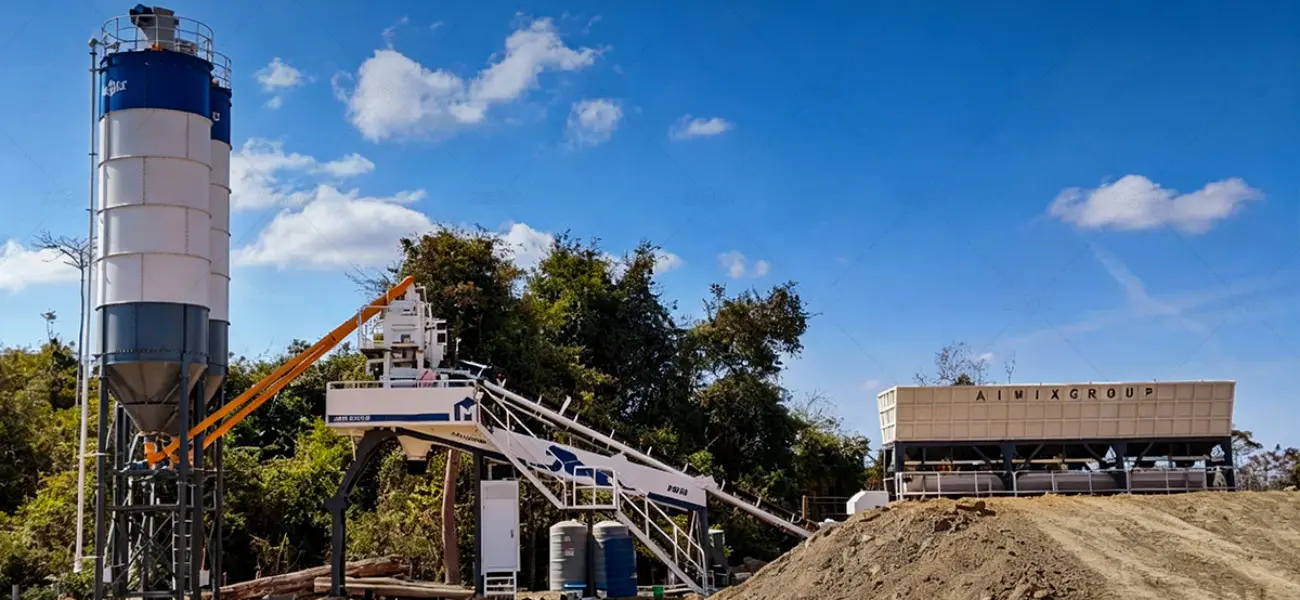
How Can Fast Installation Protect the Construction Schedule?
Once the concrete supply plan is clear, the next question is installation time.
A traditional batching plant may require more site preparation before production starts. Foundation work, component installation, electrical connections, testing, and commissioning can all affect the schedule.
For a long-term project, several weeks of preparation may be easier to absorb. For a six-month project, however, the same delay represents a much larger percentage of the total project period.
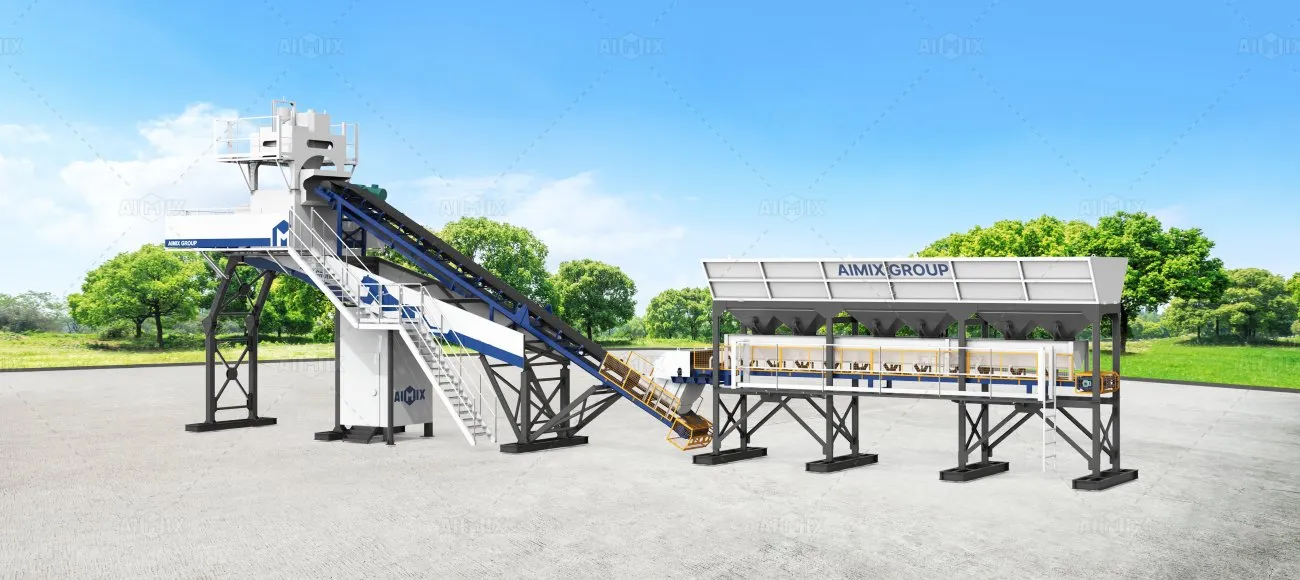
A fast installation concrete batching plant can therefore be useful when the contractor needs to start concrete production quickly and reduce the time between equipment arrival and actual operation.
Why Does Installation Speed Matter More on Short Projects?
Imagine that a six-month project loses four weeks before the concrete plant becomes operational. The contractor then has only about five months of production time left.
If concrete work follows a strict milestone schedule, this delay may affect several downstream activities. Foundation work can move later. Structural work can follow later. Concrete truck scheduling can become more difficult.
Consequently, faster installation can have value beyond the installation itself. It can help contractors protect the time available for concrete production.
Which Indonesian Projects Can Benefit From This Approach?
Not every project needs its own batching plant. However, certain Indonesian construction conditions can make on-site concrete production more attractive.
Road and Infrastructure Projects
Road and infrastructure projects often extend across large areas. Some sites are also located far from established ready-mix suppliers.
When concrete must travel a long distance, delivery time becomes an important factor. Traffic, road conditions, weather, and site access can make delivery schedules harder to control.
Producing concrete closer to the work area can reduce this dependency. Furthermore, a mobile or fast installation solution may provide greater flexibility when construction moves between work zones.
Industrial and Commercial Projects
Factories, warehouses, commercial buildings, and other developments can have concentrated concrete demand during structural construction.
The contractor may need high output for several weeks and much less concrete toward project completion. In this situation, owning a permanent production facility may not always match the project’s actual needs.
A faster installation solution can provide production capacity during the intensive construction stage while also leaving the possibility of using the equipment on another project later.
Remote and Island Construction Sites
Indonesia’s geography creates another consideration. A construction site may be located on an island or in an area where commercial ready-mix supply is limited.
In such cases, the question is not simply whether ready-mix concrete is available. Contractors should also examine delivery distance, truck cycle time, concrete quality control, and the risk of delivery interruptions.
Therefore, an on-site batching plant can give contractors more direct control over concrete production.
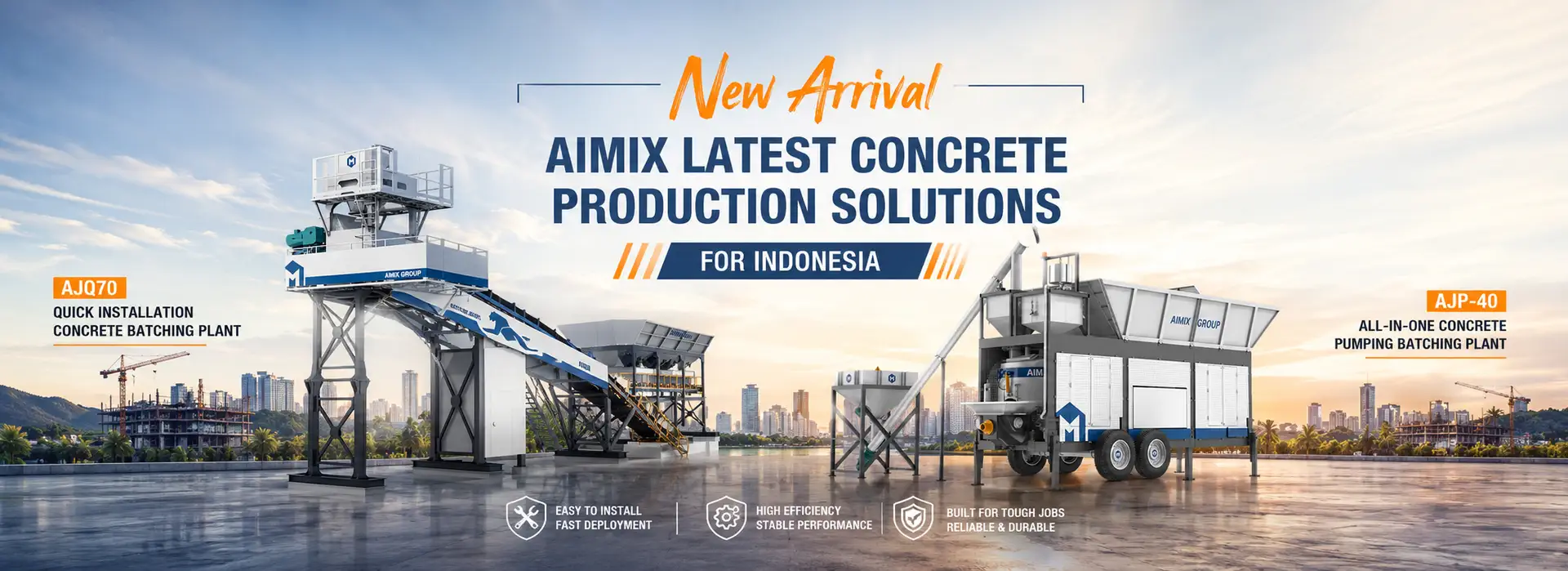
What Plant Capacity Is Reasonable for Six Months?
After checking the site and schedule, contractors should calculate the required production rate.
A plant’s rated capacity does not equal its guaranteed daily output. Actual production depends on loading efficiency, aggregate supply, mixer cycle time, truck availability, operator performance, mix design, and site logistics.
When Can a 50 m³/h Plant Work?
Suppose a project needs around 100–150 m³ of concrete on a normal day and occasionally reaches 200 m³ during major pours.
A 50 m³/h plant can theoretically produce 200 m³ in four hours of effective production. This gives the contractor a useful production margin while avoiding the need to install an excessively large plant.
However, the contractor should still check whether trucks can remove concrete from the plant quickly enough. Otherwise, plant capacity may exceed the actual site demand.
When Should You Consider 70 m³/h or More?
A larger plant may become relevant when the project has frequent high-volume pours. For example, a contractor may need to supply several concrete trucks continuously during major structural work.
In this situation, additional production capacity can reduce waiting time and provide more room for peak demand.
However, higher capacity also requires appropriate aggregate storage, power supply, transportation, and site organization. Therefore, increasing capacity should follow a clear production requirement rather than simply choosing the biggest available model.
Can an On-Site Plant Make Financial Sense for Six Months?
The financial calculation should include more than the purchase price.
Contractors should compare the complete cost of external concrete supply with the cost of producing concrete on site. This includes transportation, delivery waiting time, labor, power, aggregate handling, maintenance, installation, and equipment utilization.
For example, a remote project may pay a higher effective concrete cost because ready-mix trucks travel long distances. If deliveries become difficult during peak construction periods, the contractor may also need additional trucks or longer working hours.
By comparison, an on-site plant requires an initial investment but can provide greater control over production timing.
Think About the Plant After the Six-Month Project
This is one of the most important questions for contractors.
If the equipment can move to another construction site, its value does not necessarily end when the first project is completed.
For a contractor handling several projects each year, the equipment can potentially support multiple jobs. In that case, the calculation should look beyond the first six months.
Instead of asking only, “How much will this plant cost for six months?” consider the broader question: “How many projects can this equipment support after the first project?”
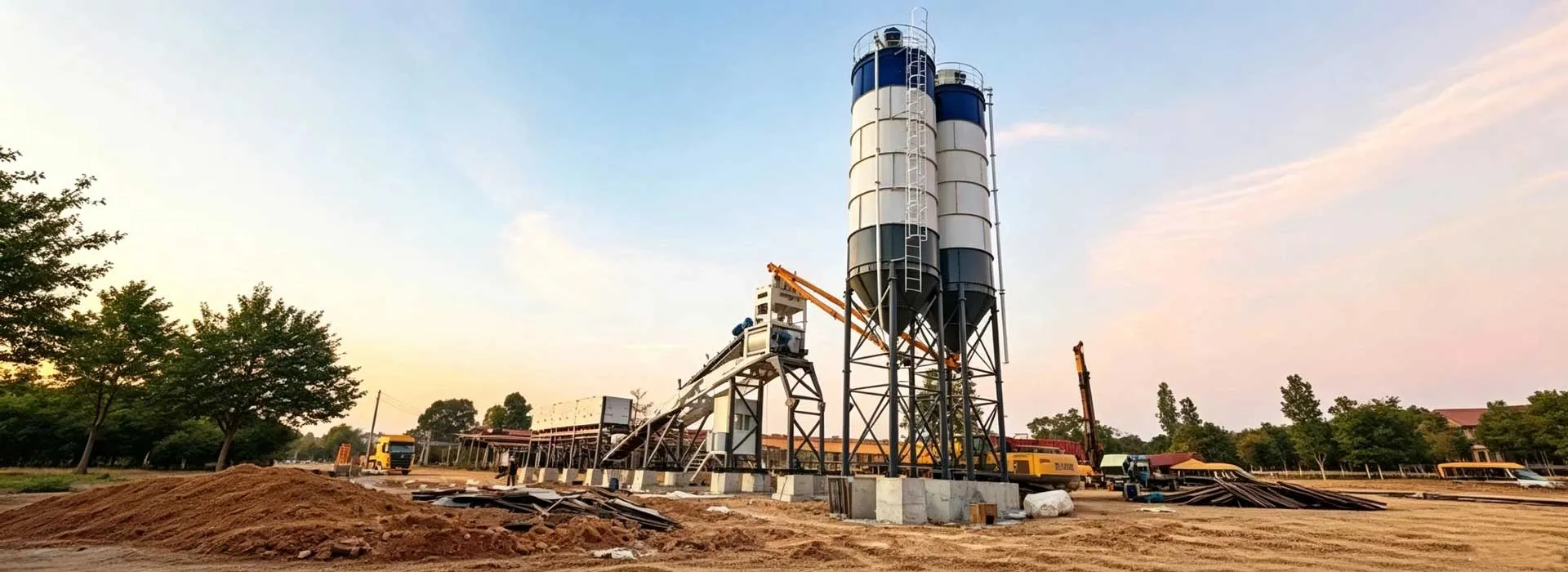
Should You Compare Buying a Plant With an RMC Solution?
For some projects, buying a batching plant is not necessarily the most practical option. If a reliable supplier operates nearby and can provide the required volume consistently, external concrete supply may remain a viable solution.
That is why contractors should compare actual project conditions before making a decision.
For example, an rmc plant for sale may be considered when the contractor wants greater control over ready-mix concrete production and expects continued demand beyond a single short-term project.
The comparison should include both operational and financial factors. More importantly, the contractor should use the same assumptions for both options.
| Factor | On-Site Batching | External Ready-Mix Supply |
|---|---|---|
| Production control | Higher direct control | Depends on supplier |
| Transport distance | Potentially shorter | Depends on supplier location |
| Initial investment | Higher | Lower equipment investment |
| Short-term flexibility | Depends on plant design | Depends on supplier capacity |
| Future project use | Can be valuable if relocatable | No equipment asset |
As a result, the right solution depends on the project’s location, concrete volume, schedule, and contractor’s future workload.
What Site Conditions Should Indonesian Contractors Check?
Fast installation does not mean that site preparation can be ignored.
Before ordering equipment, check the available installation area, ground condition, aggregate storage space, truck access, power supply, water supply, drainage, and local transportation conditions.
Rainfall also deserves attention. Poor drainage can affect aggregate handling and site access during heavy rain. Therefore, the batching area should have a practical layout that supports stable daily operations.
At the same time, the contractor should consider where cement, aggregates, admixtures, and other materials will be stored. A plant can have sufficient rated capacity, but poor material logistics can still limit actual production.
When May a Fast Installation Plant Not Be the Right Choice?
A fast installation plant does not automatically make sense for every six-month project.
If the total concrete requirement is small, the site is close to a reliable ready-mix supplier, and concrete demand is spread evenly, external supply may be easier to manage.
Likewise, if the project site has very limited space or difficult access for aggregate delivery and concrete trucks, the contractor needs to evaluate the complete site logistics before selecting equipment.
Therefore, the decision should come from project data rather than from the plant’s installation speed alone.
What Should You Check Before Buying?
Before making a final decision, use a simple project checklist.
- What is the total concrete requirement in m³?
- What is the highest daily concrete demand?
- How many hours per day will the plant operate?
- How far is the nearest reliable ready-mix supplier?
- How long is the average ready-mix truck cycle?
- Can trucks access the project site throughout the year?
- How much space is available for the plant and aggregate storage?
- What power and water resources are available?
- How quickly must concrete production begin?
- Can the plant be relocated after the six-month project?
- Will the contractor have another project that can use the same equipment?
These questions help turn a general equipment decision into a project-specific calculation.
How Can We Support a Short-Term Indonesian Project?
For a six-month project, the goal should not be to buy the largest plant. The goal is to create a concrete production system that matches the construction schedule.
We can evaluate the project’s required output, installation conditions, operating period, transportation needs, and future equipment use. The AJQ fast installation series, for example, includes 50, 70, 100, and 150 m³/h options for different production requirements.
Depending on the project, a contractor can also consider jual batching plant options and compare equipment configuration, capacity, installation requirements, and long-term utilization before making a purchase decision.
For Indonesian contractors, local service and spare-parts support should also be part of the evaluation. A batching plant needs to support daily construction, not simply arrive at the site.
So, Is It Suitable for Your Six-Month Project?
A fast installation concrete batching plant can be suitable for a six-month Indonesian construction project when concrete demand is high enough, ready-mix delivery is difficult or costly, and the contractor needs to start production quickly.
However, the six-month duration alone does not justify the investment. The decision should consider total concrete volume, peak daily demand, site location, installation conditions, transport logistics, operating costs, and the plant’s future use.
If the project requires reliable concrete supply within a limited construction window, fast installation can become an important part of the overall project strategy. If the equipment can also support future projects, the calculation becomes even broader.
Planning a six-month construction project in Indonesia? Share your project location, total concrete volume, peak daily demand, construction schedule, and expected start date with us. We can help you estimate the suitable batching plant capacity and develop a concrete production solution around your actual project needs.