Construction schedules across Latin America are becoming increasingly demanding. Road expansion, bridges, mining infrastructure, housing developments, and urban projects all require reliable concrete supply without unnecessary delays. For contractors evaluating equipment investment, the concrete plant price is important, but so are installation time, mobility, production efficiency, and the ability to start supplying concrete quickly.
Traditional concrete plants can require substantial foundation work, complicated installation procedures, and longer commissioning periods, all of which can affect the overall concrete plant price(planta de concreto precio) and project investment. A quick-installation concrete plant offers a different approach. By using a modular structure and simplified installation process, contractors can establish concrete production capacity faster while reducing site preparation requirements and responding more effectively to tight construction schedules.
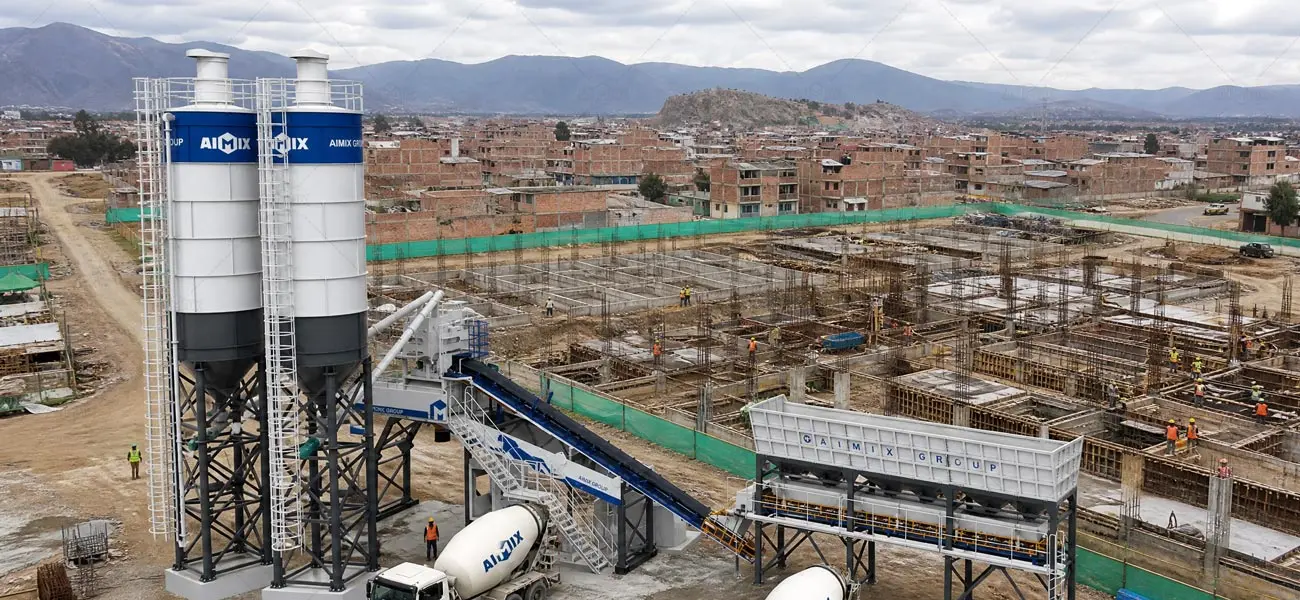
Why Installation Speed Matters for Latin American Contractors
For many infrastructure projects, delays during equipment installation can affect the entire construction schedule. A contractor may have aggregates, cement, labor, and construction machinery ready, yet concrete production cannot begin until the batching plant is fully installed and commissioned.
This is particularly important in Latin America, where projects may be located far from established industrial areas. Transport distances, challenging terrain, limited infrastructure, and variable weather conditions can make conventional plant installation more complicated.
Reducing the Time Before Concrete Production
A quick-installation plant is designed to minimize the amount of site preparation and assembly required. Compared with a conventional stationary concrete plant(planta de concreto), a modular design can reduce installation procedures and allow contractors to begin production much sooner.
For projects operating under strict deadlines, every day saved during installation can translate into more productive construction time. Faster commissioning also means contractors can start supplying concrete to foundations, roads, bridges, retaining structures, and other applications earlier.
How Quick-Installation Plants Improve Project Efficiency
The value of a quick-installation concrete plant is not limited to faster setup. Its design can also improve project flexibility, logistics, and equipment utilization throughout the construction cycle.
Less Dependence on Permanent Foundations
Conventional batching plants often require substantial civil engineering work before equipment installation. Depending on the project, this may include concrete foundations, embedded components, drainage arrangements, and other site preparation.
A quick-installation system can reduce these requirements through a modular and self-supporting structure. This is especially useful for temporary infrastructure projects, remote construction sites, and contractors who expect to relocate equipment after completing one project.
Faster Relocation Between Projects
Latin American contractors may work on multiple projects across different regions. A plant that can be dismantled, transported, and installed at another location provides greater equipment utilization than a permanently fixed facility.
This flexibility can be valuable for road construction companies and contractors working on sequential projects. Instead of investing in a completely new production facility for every location, the same equipment can potentially serve multiple projects during its service life.
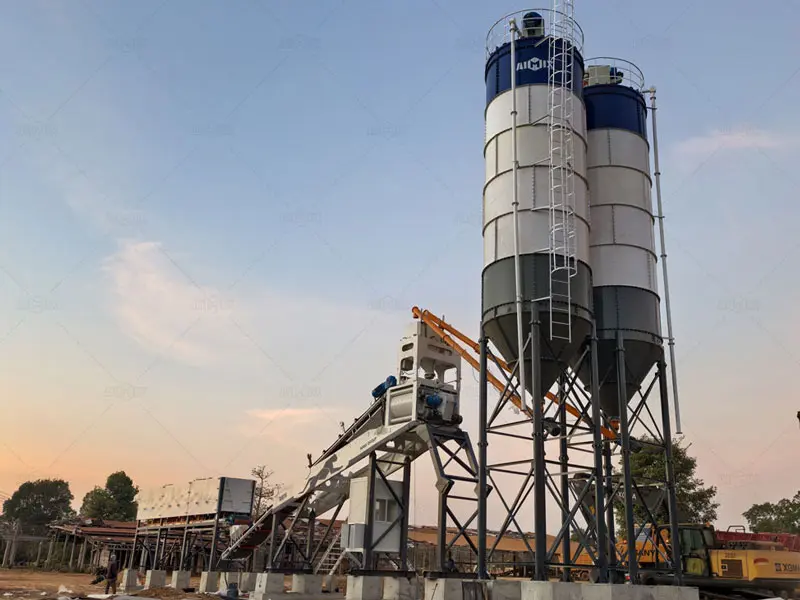
Evaluating Concrete Plant Price Beyond the Initial Investment
When comparing concrete plant price, contractors should avoid evaluating equipment solely according to its purchase quotation. The total investment should also consider foundation construction, transportation, installation labor, commissioning, power consumption, maintenance, and potential relocation costs.
| Cost Factor | Why It Matters |
|---|---|
| Equipment purchase | Determines the initial capital investment |
| Site preparation | Can significantly affect installation costs |
| Transportation | Important for remote or frequently relocated projects |
| Installation | Shorter installation can reduce labor and downtime |
| Operating costs | Influence long-term production economics |
For this reason, a slightly higher equipment quotation does not necessarily mean a higher overall project cost. A plant that reaches production faster and requires less site preparation may deliver a more favorable return on investment.
Why the AJQ70 Quick-Installation Concrete Plant Fits Fast-Paced Projects
The AJQ70 quick-installation concrete plant(AJQ70 planta de concreto de instalación rápida) is designed for contractors that need relatively high production capacity while maintaining installation flexibility. Its modular configuration is intended to simplify transportation and assembly compared with traditional fixed batching plant structures.
Designed for Rapid Installation
One of the key advantages of the AJQ70 quick-installation concrete plant is its focus on shortening the period between equipment arrival and concrete production. With proper site preparation and technical support, its modular structure can significantly simplify the installation process.
This characteristic can be particularly useful for highway construction, bridge projects, commercial developments, and mining infrastructure where construction schedules require continuous concrete supply.
Suitable for Relocatable Operations
Contractors do not always need a permanent concrete production facility. A project may move from one section of a highway to another, or a contractor may complete one infrastructure contract before starting another in a different region.
The AJQ70 quick-installation concrete plant can provide a practical solution for these situations by combining production capacity with a more flexible installation concept. Contractors can therefore consider not only today’s project requirements but also how the equipment may be utilized on future projects.
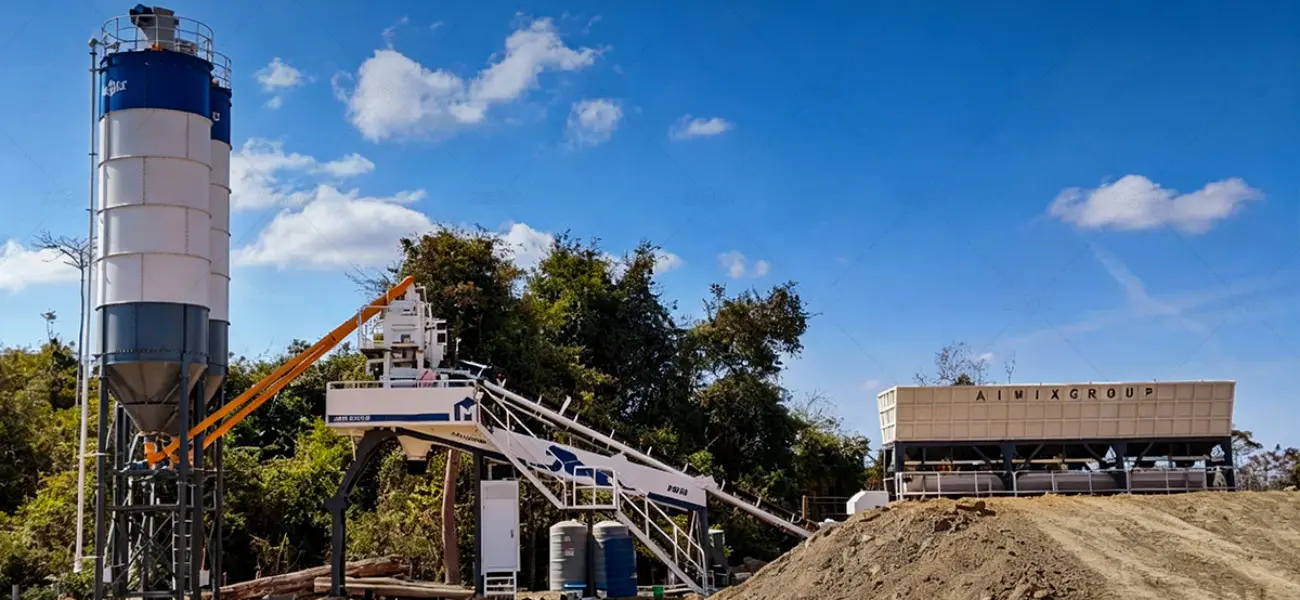
Applications from Peru to Other Latin American Markets
Peru is a strong example of a market where flexible concrete production equipment can support demanding construction environments. Infrastructure development, mining-related construction, highways, and urban projects can require concrete production close to the worksite.
When evaluating a concrete plant Peru(planta de concreto Perú) project, contractors should consider transportation distance, altitude, terrain, aggregate availability, required concrete volume, project duration, and future relocation requirements. These factors can determine whether a stationary or quick-installation solution is more appropriate.
The same evaluation approach applies to contractors in Mexico, Chile, Bolivia, Ecuador, Colombia, and other Latin American markets. A concrete plant Peru application may have different site conditions from a highway project in another country, but the underlying objective remains similar: establish dependable concrete production without creating unnecessary delays.
What Contractors Should Check Before Purchasing
Before selecting a concrete plant, contractors should assess the complete project rather than focusing on production capacity alone.
- Required output: Estimate hourly and daily concrete demand.
- Project duration: Determine whether the plant will serve one project or several.
- Site conditions: Check access roads, terrain, available space, and local construction requirements.
- Installation schedule: Confirm how quickly the plant can be assembled and commissioned.
- Transportation: Evaluate container loading, road access, and future relocation requirements.
- After-sales support: Consider technical assistance, operator training, and spare-parts availability.
Turning Faster Installation Into a Competitive Advantage
For Latin American contractors, construction speed is closely connected with equipment productivity and project profitability. A quick-installation concrete plant can reduce the waiting period before production, simplify site preparation, and provide greater flexibility when projects change location.
When comparing concrete plant price, contractors should therefore evaluate the complete lifecycle cost and the value of earlier production. For projects requiring fast deployment and flexible concrete supply, the AJQ70 quick-installation concrete plant offers a practical option worth considering. Whether the project is a highway in Peru, a bridge development, or a mining infrastructure project elsewhere in Latin America, choosing the right plant configuration can help contractors keep concrete production aligned with the construction schedule.